Guide
Raised dog feeders: benefits, risks and when to avoid them
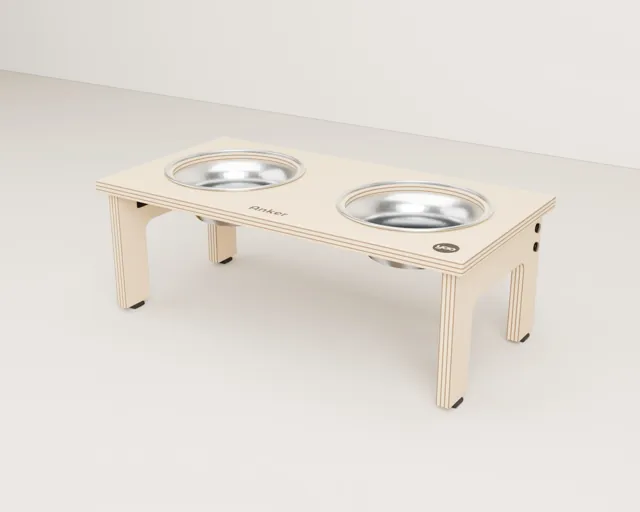
We make raised feeders, so we owe you an honest answer: they have practical advantages, but no study shows health benefits, and some dogs should check with their vet first.
Updated: 04/10/2026 · YAO, woodworking workshop in Barcelona
In short
- Real advantages: the bowl stays put, less mess, easier to fill.
- No evidence that it improves posture or arthritis.
- Bloat: a 2000 study linked raised feeders to higher risk in large and giant breeds; a 2012 study didn’t. Ask your vet.
- Megaesophagus: needs upright feeding.
What the studies say
- Glickman et al. (JAVMA, 2000): 1,637 dogs of 11 large and giant breeds; raised feeding roughly doubled bloat risk.
- Pipan et al. (JAVMA, 2012): feeder height was not a risk factor.
- 2017 review: evidence is limited and contradictory.
- ACVS lists it as a possible factor and recommends 2–3 meals a day.
If your dog is a large or giant deep-chested breed, or has a family history of bloat, ask your vet before using a raised feeder.
Choosing a height? Read How high should your dog’s raised bowl be?.
FAQ
Do vets recommend raised feeders?
There’s no general recommendation; for large deep-chested dogs many vets prefer floor feeding. Ask about your dog.
Sources
- Glickman et al., JAVMA 2000 (Purdue): factores de riesgo de la torsión gástrica
- Pipan et al., JAVMA 2012: factores de riesgo de la torsión gástrica
- Buckley, Veterinary Evidence 2017: comederos elevados y torsión gástrica (revisión)
- American College of Veterinary Surgeons: dilatación-vólvulo gástrico
- American Kennel Club: cómo elegir el cuenco de tu perro
- Washington State University: megaesófago